Investment Articles
Our Mission to Changes Lives and Create Generational Wealth through Real Estate Investing!
From Finance

Why Real Estate Analysis Matters
A real estate investment analysis is the foundation of any smart investment strategy, whether you’re evaluating multifamily syndications, private equity real estate funds, or commercial real estate investments. Understanding an asset’s cash flow potential, valuation, and risk factors is essential for making informed decisions and maximizing returns.
Unlike single-family rentals, larger multifamily properties and commercial real estate assets are valued based on income generation rather than comparable sales. This means that an in-depth financial analysis is necessary to:
Determine expected cash flow and return on investment (ROI).
Assess risk factors and potential value-add opportunities.
Compare actual property performance against pro forma projections.
Whether you’re an accredited investor looking for passive income or a new investor exploring real estate private equity, this guide will help you understand the key metrics behind evaluating multifamily investments.

Key Elements of Real Estate Investment Analysis
A thorough investment analysis involves multiple steps to evaluate a property’s potential. While no forecast is 100% accurate, a data-driven approach helps investors minimize risks and maximize their return potential.
1. Understanding Property Performance: Cash Flow vs. Appreciation

In real estate private equity, there are two primary drivers of returns:
Cash Flow: The net income left after all expenses and debt service.
Appreciation: The increase in property value over time, driven by market growth and value-add improvements.
While appreciation is difficult to predict, cash flow can be accurately projected based on rent rolls, operating expenses, and market trends. Most institutional investors and syndicators focus on cash flow first since it provides immediate, predictable returns.
2. Core Investment Metrics for Real Estate Analysis
A strong financial model provides insights into an asset’s investment potential. Here are the key metrics every investor should evaluate:
Net Operating Income (NOI): The Foundation of Property Valuation
NOI represents the property’s profitability before debt payments. It is used to determine valuation and assess investment performance.
Formula:NOI=Gross Income−Operating Expenses
Capitalization Rate (Cap Rate): Benchmark for Valuation
Cap rates help investors compare returns across different markets. A lower cap rate typically means a more stable asset in a strong market, while a higher cap rate indicates higher risk but potentially higher rewards.
Formula:Cap Rate=NOI/Property Purchase Price
Cash-on-Cash Return (COC): Measuring Investor Cash Flow
COC measures the actual cash return on invested capital. This is a critical metric for limited partners (LPs) investing in syndications or real estate funds.
Formula:COC=Annual Cash Flow/Cash Invested
Internal Rate of Return (IRR): True Investment Performance Over Time
IRR considers cash flow, appreciation, and time value of money, providing a comprehensive return measurement. A higher IRR suggests stronger long-term returns.
Equity Multiple: Measuring Total ROI
An equity multiple of 2X means an investor doubled their initial investment. In syndications, typical deals target a 1.8X to 2.5X equity multiple over 3-7 years.
3. Pro Forma vs. Actual Data: Avoiding Over-Optimistic Assumptions
Sellers often provide pro forma financials that reflect the most optimistic scenarios. Smart investors must validate assumptions by:
Reviewing tax returns and rent rolls from the past 3-5 years.
Verifying actual operating expenses to avoid underestimating costs.
Conducting a sensitivity analysis to test worst-case scenarios.
Comparing pro forma (projected) vs. actual performance data is key to avoiding misleading ROI projections.
4. Comparative Market Analysis (Comp Analysis): Benchmarking the Asset
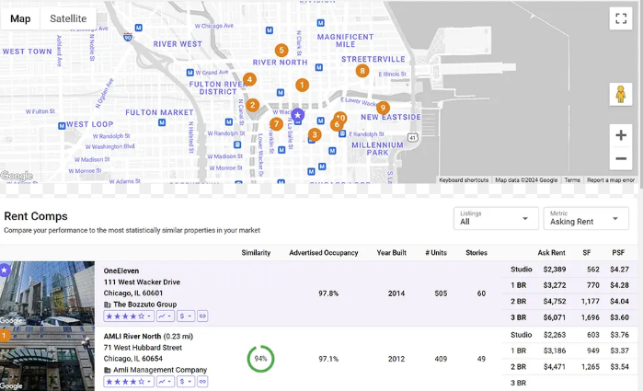
Multifamily and commercial properties cannot be valued based on nearby home sales. Instead, investors use comparative market analysis (CMA) to evaluate:
Rental Comps – Compare similar units to determine market rent potential.
Sales Comps – Compare recent sales of similar income-producing properties.
Expense Comps – Ensure operating expenses align with market standards.
This approach helps determine whether a deal is priced competitively or if there’s upside potential.
5. Income Approach: Understanding Property Revenue Streams
Income analysis is a critical part of real estate valuation. Investors must account for:
Rental Income – Projecting long-term market rent growth.
Ancillary Income – Parking fees, laundry, storage, pet fees, and other non-rental revenue.
Vacancy & Credit Loss – Assessing realistic occupancy rates.
Example of adding value:
A 100-unit apartment charges $60 per unit for in-unit washer/dryers, generating:
100×60=6,000 per month=72,000 per
At a 6% cap rate, this increases the property’s value by $1.2M.
6. Expense Analysis: Controlling Costs for Maximum Profitability
Expenses must be carefully analyzed to protect NOI and cash flow. Key expense categories include:
Property taxes and insurance
Maintenance and capital expenditures (CapEx)
Property management fees
Marketing, leasing, and tenant turnover costs
Utilities and landscaping
Even small cost increases can significantly impact NOI, making accurate expense forecasting critical.
7. Tax Advantages: Enhancing Returns with Bonus Depreciation
Real estate investment offers powerful tax incentives that enhance returns, such as:
Depreciation & Cost Segregation – Reducing taxable income by accelerating depreciation.
1031 Exchanges – Deferring capital gains taxes by rolling proceeds into new investments.
Self-Directed IRA (SDIRA) Investing – Growing wealth tax-free or tax-deferred.
Through bonus depreciation (available until 2026), investors can write off 40-80% of the asset’s cost in year one, creating significant tax savings.
Conclusion
Effective investment analysis starts with understanding how a property generates returns through cash flow and appreciation. From there, evaluating core metrics, validating assumptions against real data, benchmarking the asset to its market, analyzing income and expenses, and accounting for tax advantages allows investors to assess risk and return accurately.
Mastering these elements helps investors move beyond projections and make disciplined decisions grounded in performance, valuation, and downside protection.
Next Steps:
Whether you’re a seasoned investor or new to investing, We are here to help you protect and grow your wealth through safe, simple, and successful strategies. Let’s work together to achieve your financial goals.
Schedule a Call
Disclaimer
Investment Risk: All investments carry the risk of loss. Historical returns are provided for informational purposes only and are not indicative of future results or projections for active investments. Qualified Statements: All statements related to any past or current offering by Black Pine Equities, LLC or its subsidiaries, or affiliates are expressly qualified by and subject to the applicable offering document(s), including all information, disclosures, and disclaimers contained therein. No Professional Advice: The content within these articles, emails, and events is not intended to provide, nor should it be construed as providing, tax, investment, or legal advice. You should consult your own professional advisors before making any decisions. General Communication Notice: These articles and emails are for informational purposes only. If you received this email in error or no longer wish to receive such communications, please notify us immediately or use the provided unsubscribe link.

Investment Articles
Why Real Estate Analysis Matters
A real estate investment analysis is the foundation of any smart investment strategy, whether you’re evaluating multifamily syndications, private equity real estate funds, or commercial real estate investments. Understanding an asset’s cash flow potential, valuation, and risk factors is essential for making informed decisions and maximizing returns.
Unlike single-family rentals, larger multifamily properties and commercial real estate assets are valued based on income generation rather than comparable sales. This means that an in-depth financial analysis is necessary to:
Determine expected cash flow and return on investment (ROI).
Assess risk factors and potential value-add opportunities.
Compare actual property performance against pro forma projections.
Whether you’re an accredited investor looking for passive income or a new investor exploring real estate private equity, this guide will help you understand the key metrics behind evaluating multifamily investments.
Key Elements of Real Estate Investment Analysis
A thorough investment analysis involves multiple steps to evaluate a property’s potential. While no forecast is 100% accurate, a data-driven approach helps investors minimize risks and maximize their return potential.
1. Understanding Property Performance: Cash Flow vs. Appreciation
In real estate private equity, there are two primary drivers of returns:
Cash Flow: The net income left after all expenses and debt service.
Appreciation: The increase in property value over time, driven by market growth and value-add improvements.
While appreciation is difficult to predict, cash flow can be accurately projected based on rent rolls, operating expenses, and market trends. Most institutional investors and syndicators focus on cash flow first since it provides immediate, predictable returns.
2. Core Investment Metrics for Real Estate Analysis
A strong financial model provides insights into an asset’s investment potential. Here are the key metrics every investor should evaluate:
Net Operating Income (NOI): The Foundation of Property Valuation
NOI represents the property’s profitability before debt payments. It is used to determine valuation and assess investment performance.
Formula:NOI=Gross Income−Operating Expenses
Capitalization Rate (Cap Rate): Benchmark for Valuation
Cap rates help investors compare returns across different markets. A lower cap rate typically means a more stable asset in a strong market, while a higher cap rate indicates higher risk but potentially higher rewards.
Formula:Cap Rate=NOI/Property Purchase Price
Cash-on-Cash Return (COC): Measuring Investor Cash Flow
COC measures the actual cash return on invested capital. This is a critical metric for limited partners (LPs) investing in syndications or real estate funds.
Formula:COC=Annual Cash Flow/Cash Invested
Internal Rate of Return (IRR): True Investment Performance Over Time
IRR considers cash flow, appreciation, and time value of money, providing a comprehensive return measurement. A higher IRR suggests stronger long-term returns.
Equity Multiple: Measuring Total ROI
An equity multiple of 2X means an investor doubled their initial investment. In syndications, typical deals target a 1.8X to 2.5X equity multiple over 3-7 years.
3. Pro Forma vs. Actual Data: Avoiding Over-Optimistic Assumptions
Sellers often provide pro forma financials that reflect the most optimistic scenarios. Smart investors must validate assumptions by:
Reviewing tax returns and rent rolls from the past 3-5 years.
Verifying actual operating expenses to avoid underestimating costs.
Conducting a sensitivity analysis to test worst-case scenarios.
Comparing pro forma (projected) vs. actual performance data is key to avoiding misleading ROI projections.
4. Comparative Market Analysis (Comp Analysis): Benchmarking the Asset
Multifamily and commercial properties cannot be valued based on nearby home sales. Instead, investors use comparative market analysis (CMA) to evaluate:
Rental Comps – Compare similar units to determine market rent potential.
Sales Comps – Compare recent sales of similar income-producing properties.
Expense Comps – Ensure operating expenses align with market standards.
This approach helps determine whether a deal is priced competitively or if there’s upside potential.
5. Income Approach: Understanding Property Revenue Streams
Income analysis is a critical part of real estate valuation. Investors must account for:
Rental Income – Projecting long-term market rent growth.
Ancillary Income – Parking fees, laundry, storage, pet fees, and other non-rental revenue.
Vacancy & Credit Loss – Assessing realistic occupancy rates.
Example of adding value:
A 100-unit apartment charges $60 per unit for in-unit washer/dryers, generating:
100×60=6,000 per month=72,000 per
At a 6% cap rate, this increases the property’s value by $1.2M.
6. Expense Analysis: Controlling Costs for Maximum Profitability
Expenses must be carefully analyzed to protect NOI and cash flow. Key expense categories include:
Property taxes and insurance
Maintenance and capital expenditures (CapEx)
Property management fees
Marketing, leasing, and tenant turnover costs
Utilities and landscaping
Even small cost increases can significantly impact NOI, making accurate expense forecasting critical.
7. Tax Advantages: Enhancing Returns with Bonus Depreciation
Real estate investment offers powerful tax incentives that enhance returns, such as:
Depreciation & Cost Segregation – Reducing taxable income by accelerating depreciation.
1031 Exchanges – Deferring capital gains taxes by rolling proceeds into new investments.
Self-Directed IRA (SDIRA) Investing – Growing wealth tax-free or tax-deferred.
Through bonus depreciation (available until 2026), investors can write off 40-80% of the asset’s cost in year one, creating significant tax savings.
Conclusion
Effective investment analysis starts with understanding how a property generates returns through cash flow and appreciation. From there, evaluating core metrics, validating assumptions against real data, benchmarking the asset to its market, analyzing income and expenses, and accounting for tax advantages allows investors to assess risk and return accurately.
Mastering these elements helps investors move beyond projections and make disciplined decisions grounded in performance, valuation, and downside protection.
Next Steps:
Whether you’re a seasoned investor or new to investing, We are here to help you protect and grow your wealth through safe, simple, and successful strategies. Let’s work together to achieve your financial goals.
Schedule a Call
Disclaimer
Investment Risk: All investments carry the risk of loss. Historical returns are provided for informational purposes only and are not indicative of future results or projections for active investments. Qualified Statements: All statements related to any past or current offering by Black Pine Equities, LLC or its subsidiaries, or affiliates are expressly qualified by and subject to the applicable offering document(s), including all information, disclosures, and disclaimers contained therein. No Professional Advice: The content within these articles, emails, and events is not intended to provide, nor should it be construed as providing, tax, investment, or legal advice. You should consult your own professional advisors before making any decisions. General Communication Notice: These articles and emails are for informational purposes only. If you received this email in error or no longer wish to receive such communications, please notify us immediately or use the provided unsubscribe link.

Copyright © 2026 Black Pine Equities. All rights reserved.